Flip Trickster - Parkour Simul
7 Minute GamesSimulation
3.76.47K Reviews
- Version
- 1.11.67
- Installs
- 10.00M
- Age Rating
- Everyone
Screenshots
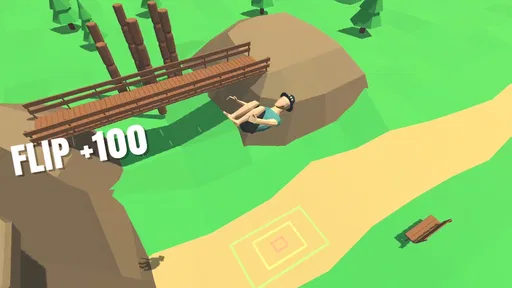
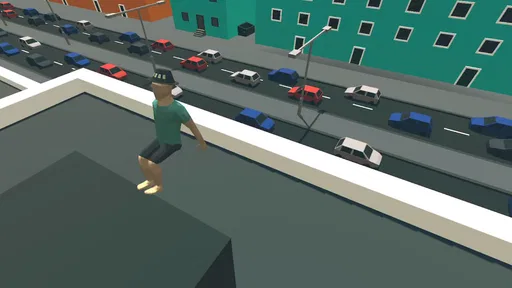
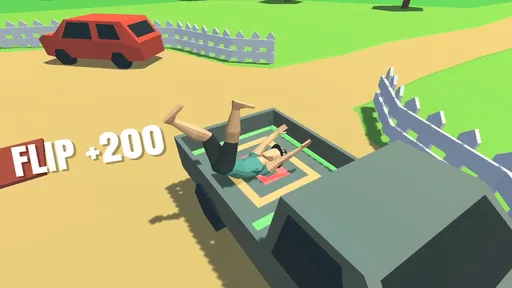
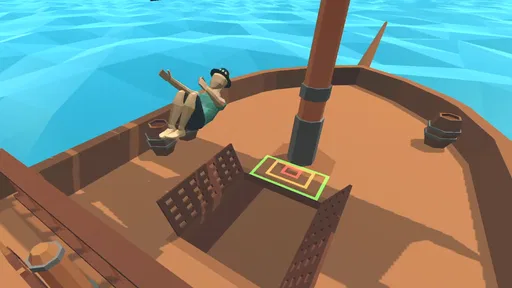
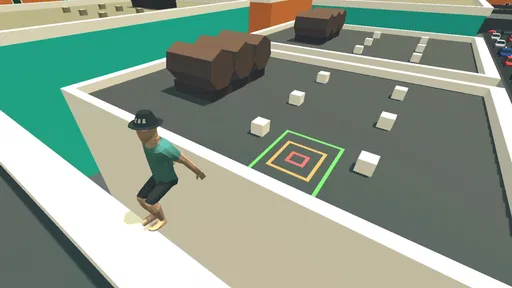
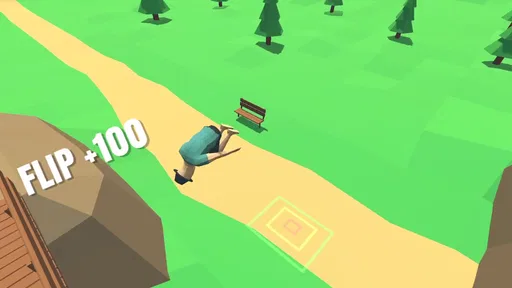
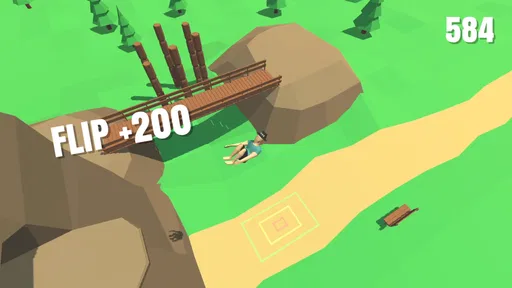
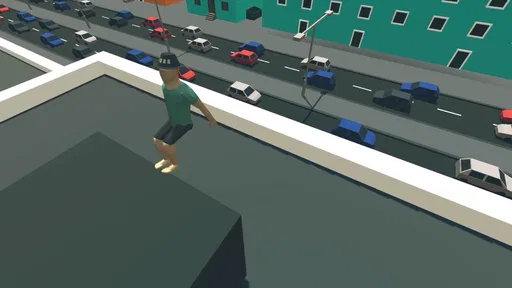
Our Review of Flip Trickster - Parkour Simul
 Analysis by Appyee
I spent time with Flip Trickster as a compact parkour simulation built around one clear question: can I launch, rotate, and land a trick cleanly enough to keep moving forward? That focus makes it easy to understand within minutes, but the simplicity is deceptive. A successful attempt depends on timing, angle, landing position, and knowing when not to force another rotation. I found myself treating each short session less like a conventional action game and more like a series of small experiments.
That makes this a useful choice when I want a game I can open for a few minutes without learning a large control system. It is free to start, aimed at Everyone, and comes from 7 Minute Games. The store summary asks whether I could become the next parkour champion, but my experience was more grounded: improvement comes from reading mistakes and adjusting one part of a jump at a time.
How the early goals turn a simple jump into a routine
The first attraction is immediate feedback. I do not need to study a long tutorial or memorize a complicated character build before attempting a trick. The basic loop is easy to grasp: begin a jump, control the flip, and try to land safely. That quick entry is important because the game’s appeal depends on repetition. If the first attempt required too much explanation, the central rhythm would lose its charm.
Early on, my goal was not simply to perform the biggest rotation. It was to understand how much control I actually had during a jump. A failed landing usually gave me something practical to consider: I might have started rotating too late, held the motion too long, or approached the landing with the character badly aligned. That distinction matters. The game does not feel like a random button press when I pay attention to the relationship between launch and landing.
I recommend beginning with conservative attempts rather than immediately chasing spectacular tricks. A modest jump that lands cleanly teaches more than an ambitious attempt that ends before I can tell what went wrong. This is one of the less obvious strengths of the design: the game encourages me to turn failure into a small adjustment, not just restart mindlessly.
The early goals also work because they are visual and physical rather than buried in menus. I can see whether a jump has enough height, whether the body is rotating too quickly, and whether the landing surface is becoming reachable. That makes progress feel personal. I am not merely filling a bar; I am becoming more consistent with a movement that initially felt awkward.
Why the first sessions feel approachable
The short-attempt structure suits everyday use. I could play while waiting for transport, during a brief break, or when I wanted something more active than a passive puzzle but less demanding than a full action adventure. One realistic routine is to make a handful of attempts, identify one recurring mistake, and stop after improving it once. That approach prevents the game from becoming an exhausting cycle of retries.
It is also a good fit for players who enjoy physics-flavored games but do not want a large open world. The focus stays on the trick itself. There is less pressure to explore a map, manage equipment, or follow a long story before the next meaningful action. For me, that narrow scope made the opening easier to appreciate.
Still, the same narrow scope may disappoint someone expecting a complete parkour career mode. This is not the right pick if I want deep character development, a narrative campaign, or a broad collection of activities. Its early goals are about mastering movement and clearing the next challenge, not building a detailed athlete or city.
Progress signals, unlocks, and the value of a clean landing
What kept me playing was the way progress could be felt through better execution. Even when I was not making a dramatic leap, a cleaner landing showed that I had learned something. This is a different kind of progression from games where new equipment immediately makes the character stronger. Here, my own timing is the main improvement I bring from one attempt to the next.
The game’s challenge structure gives those attempts direction. I was not only repeating a jump for its own sake; I had a reason to try again and a clearer idea of what success should look like. That matters for retention because unstructured repetition becomes dull quickly. When a stage or objective asks for a more precise result, even a familiar movement can feel newly demanding.
I found it helpful to separate three questions after every failed attempt: did I leave the platform correctly, did I rotate enough, and did I prepare for the landing? This simple checklist is more useful than blaming the controls as a whole. It also reveals when I am attempting a move beyond my current consistency. In those moments, repeating the same input rarely helps; changing the approach does.
Unlocks and challenge progression are most effective when they give me a fresh target without making earlier learning irrelevant. I appreciated that the game’s central skill remains recognizable as the demands increase. I am still working with jumps and flips, but the margin for error becomes more important. That creates a satisfying connection between early practice and later performance.
There is a trade-off, though. Players who need frequent, obvious rewards may find the progress signals less exciting than in a collection-heavy simulation. The pleasure here comes from execution, not from constantly receiving new items. If my favorite part of a mobile game is collecting characters, decorating spaces, or comparing extensive statistics, this parkour-focused format may feel sparse.
A practical way to read the challenge
I would not judge a stage only by whether I completed it on the first try. A better measure is whether I can explain the failure and reproduce the correction. For example, if I keep landing short, I should focus on the launch and rotation timing instead of making random changes at the end of the jump. If I overshoot, reducing the motion may be more useful than trying to react faster at the landing.
This habit also makes the game more accessible to casual players. I do not need perfect reflexes from the beginning if I am willing to observe the result. The game rewards patience, but not passive patience; I need to make deliberate adjustments. That combination gives the simulation a little more depth than its simple presentation suggests.
Difficulty curve: where practice becomes pressure
The difficulty curve is built around shrinking room for error. Early attempts let me concentrate on the basic relationship between jumping and flipping. Later challenges ask for more confidence in the same actions, and that is where the distinction between understanding a move and performing it consistently becomes clear.
I liked this direction because it avoids overwhelming the player with too many mechanics at once. The challenge grows through precision, not through a pile of unrelated rules. That keeps the game readable. When I failed, I generally knew which part of the attempt deserved attention, even if correcting it took several tries.
At the same time, the curve can feel demanding if I play impatiently. A player who treats every attempt as a race toward the next unlock may repeat the same mistake for too long. I had better results when I slowed down, watched the full movement, and changed only one variable. That is a useful tip for anyone who feels stuck: do not overhaul the entire attempt after one miss.
The controls are therefore part of the learning curve rather than something I can ignore. Small differences in timing can change the outcome, and the game’s appeal depends on accepting that sensitivity. I would not describe the experience as relaxing in the traditional sense. It is calm when I am analyzing a jump, but frustrating when I keep forcing a trick that I have not yet learned.
For a younger player, the Everyone rating makes the game approachable in terms of content. However, that does not mean every challenge will feel easy. The age label describes the audience suitability, while the actual play still asks for concentration and repeated attempts. I would introduce it as a safe, lighthearted simulation, but I would also explain that mastery may take patience.
When another type of game is a better fit
Compared with a traditional racing game, this offers less speed and less emphasis on long courses. Compared with a sports career simulator, it has a much narrower sense of progression. Compared with an endless runner, it is more deliberate because the important moment is the jump and landing rather than constant forward movement. I prefer this game when I want to study one stunt and improve it, not when I want a broad competitive system.
Someone looking for realistic training should also keep expectations sensible. The simulation presents parkour as a game-like challenge, not as a substitute for physical instruction. I would never use it to judge whether a real-world stunt is safe or achievable. Its value is in timing, observation, and playful repetition on a screen.
Device compatibility is reasonably broad for a modern mobile title: the listed minimum is Android 6.0. The current version is 1.11.67, so I would still keep the app updated through the relevant store when possible. On an older phone, the practical experience may depend on general device performance, but the low-complexity concept makes it more approachable than visually heavy simulation games.
Retention pressure, monetization, and the point where I would stop
The game’s strongest retention tool is the desire to correct a near miss. A landing that fails by a small margin can be more motivating than an easy success because it suggests the next attempt might work. That feeling is effective in short sessions, especially when I can identify a specific adjustment instead of simply hoping for better luck.
There is also a natural stopping point. After several repeated failures, my attention drops and the same challenge begins to feel like pressure rather than practice. I found it healthier to leave after a small improvement and return later. Because attempts are compact, taking a break does not feel like abandoning a long campaign.
The free entry helps with that low-commitment style. I can try the basic experience before deciding whether it suits me, while optional in-app purchases range from $0.99 to $19.99 per item. That range is worth keeping in mind before spending. I would first establish whether I genuinely enjoy the movement loop, because buying something cannot replace learning the timing that makes a landing satisfying.
My advice is to treat purchases as optional convenience or support rather than a solution to frustration. If I am losing because I have not understood the jump, spending will not create the same satisfaction as improving the attempt. This is especially important for younger users: the game is free, but in-app purchases mean a device owner should still pay attention to store settings and purchasing habits.
The audience size suggests that the format has broad reach, with over ten million installs, while its average rating is 3.7 from around eighty-two thousand ratings. I read that combination as a sign of a recognizable but not universally loved experience. Many players can understand the appeal quickly, yet the repetition and precision will naturally divide people. I would not choose it solely because it is popular; I would choose it because I enjoy skill-based retries.
It has around six thousand five hundred written reviews, which gives the game a substantial public conversation around it. For my decision, however, the more useful question is personal tolerance: am I comfortable repeating a short stunt until the timing feels right? If yes, the retention loop can be compelling. If no, the same loop may feel thin after the novelty fades.
Who should play and who should skip it
I would recommend it to someone who likes bite-sized simulations, visual trial and error, and games where personal consistency matters more than complex strategy. It works particularly well for a player who enjoys setting a small target, such as improving a landing, then closing the app without needing to complete a long mission.
I would be more cautious recommending it to players who dislike restarting, expect a rich story, or want multiplayer competition to provide motivation. It is also not ideal for anyone seeking a realistic physical education tool. The game’s purpose is entertainment built around stylized parkour challenges, and its best moments come from the screen-based feedback loop.
My progression verdict after living with the loop
As a simulation game, this succeeds when it keeps my attention on the relationship between intention and result. Its early goals are understandable, its progress is most visible through improved execution, and its difficulty has a clear logic: the same basic idea becomes harder to perform reliably. That gives the experience more structure than the short description suggests.
The biggest limitation is also the foundation of its identity. There is only so much variety I can get from a focused flip-and-landing loop before I need a break. I would not play it continuously for hours, and I would not recommend it to someone who needs constant new systems to stay engaged. In short sessions, however, that limitation becomes an advantage because I can return without remembering a complicated storyline or control scheme.
My final recommendation is to try it with a practice mindset. Aim for controlled landings, change one part of a failed attempt, and judge progress by consistency rather than by the most dramatic trick. That approach makes the challenge feel fairer and reveals the game’s real appeal. It is at its best when a failed flip teaches me exactly what to try differently next time.
7 Minute Games has kept the concept accessible enough for casual play while leaving room for players who enjoy precision. The free price and Everyone rating make it easy to sample, and the current version gives the game a maintained place on compatible devices. I would keep it installed as a quick skill-based diversion, not as my main simulation game. For the right player, Flip Trickster turns a few seconds of virtual movement into a surprisingly thoughtful test of timing.
Verdict
Strengths of Flip Trickster - Parkour Simul
- Realistic physics make every flip feel satisfying to master.
- Multiple environments keep the challenges from feeling repetitive.
- Replay-focused gameplay makes it easy to practice difficult tricks.
- Simple controls are accessible for beginners and responsive for experts.
- Short levels work well for quick gaming sessions.
Limitations of Flip Trickster - Parkour Simul
- Ads can interrupt the experience, especially between attempts.
- Some advanced challenges require considerable trial and error.
- Physics occasionally produce unpredictable landings or awkward animations.
- Progress may feel slow without spending time replaying earlier levels.
- The game offers limited variety beyond flipping and landing challenges.
Similar Picks in This Category
View All
Truckers of Europe 3
Wanda Software4.3

Town Building Life Simulator
XGame Global4.2

Fidget Toys Trading・Pop It 3D
Freeplay Inc4.7

Sculpt People
CrazyLabs LTD4.4

Scary Teacher 3D
Z & K Games4.2

Hair Tattoo: Barber Shop Game
CASUAL AZUR GAMES4.3
Frequently Asked Questions
What is Flip Trickster - Parkour Simul?
Flip Trickster - Parkour Simul is a physics-based parkour game focused on performing flips, jumps, and landing tricks successfully. You launch your character from platforms, control rotation while airborne, and try to land safely in increasingly challenging environments. The game is built around short attempts, quick restarts, and improving your timing rather than following a traditional story.
How do you play Flip Trickster - Parkour Simul?
Gameplay is based mainly on timing and touch controls. You generally tap or hold the screen to influence your character’s jump and rotation, then release or adjust your input to prepare for landing. Each level requires you to judge distance, height, and momentum carefully. At first the controls may feel unpredictable, but practice helps you understand how different jumps behave.
Is Flip Trickster - Parkour Simul free to download?
The game can generally be downloaded for free, although the exact availability and pricing may vary between the Google Play Store and Apple App Store. Like many free mobile games, it may include advertising, optional purchases, or other monetization features. Before installing, it is worth checking the store listing for current information about ads, in-app purchases, and supported devices.
Does Flip Trickster - Parkour Simul require an internet connection?
Flip Trickster - Parkour Simul is primarily designed as a single-player experience, so many of its basic jumping and parkour challenges may be playable without a continuous internet connection. However, advertisements, updates, analytics, cloud-related features, or certain online content may require connectivity. If you want to play offline, download the game and test its main modes before relying on it during travel.
Is Flip Trickster - Parkour Simul suitable for children and casual players?
The game is easy to understand because its main objective is simply to jump, rotate, and land successfully, making it accessible to casual players. However, the physics can be challenging, and repeated failed attempts may require patience. Parents should also review the store rating, advertising, and in-app purchase information, since the appropriate age experience can vary depending on the device and current version.
Play our best games!


